Why You Never Know What to Do Next in Your Job Search
Feel stuck in your job search? Learn why next-step uncertainty happens, how to spot the real signal, and how Ask Tua helps you decide what to do next.
 Lucien Krogel·July 23, 2026·12 min read
 Author:Lucien Krogel·Founder & CEO
You have real experience in customer support. You know how to handle an angry customer, work a ticket queue under pressure, and de-escalate a situation before it reaches a manager. So why do experienced candidates still lose support interviews at SaaS and tech companies?
The answer, consistently, is preparation. Not experience. According to Grotech Search's 2026 hiring analysis, companies now expect deeper preparation on product, market and customer base than most candidates realise. And as research from Koji shows, many candidates cannot give a crisp story that links their background, their motivation and why this specific SaaS support role makes sense for them.
The real issue: experience is not the same as evidence. Hiring managers in SaaS support want proof of empathy, troubleshooting judgement, ownership and retention impact, and they want it structured, specific and ready.
This guide gives you a repeatable prep system you can use before any customer support interview. It covers:
Most candidates walk into support interviews thinking they need to demonstrate that they are friendly, patient and good at solving problems. Those qualities matter, but they are table stakes. In SaaS and tech support, hiring managers are assessing something more specific.
As Mascallnet's SaaS support strategy guide puts it: "Hiring managers expect you to know where your role fits in that ecosystem and how you contribute to retention and adoption, not only ticket volume." Support in SaaS is increasingly treated as a growth lever, not just a cost centre. Bettermode's customer support trends research confirms that support is now directly tied to customer lifetime value and churn reduction.
That changes what interviewers are measuring. The table below shows the core capabilities they test and what strong evidence looks like for each one.
The shift to make: stop thinking about answering questions. Start thinking about proving capabilities. Every answer you give is evidence for or against one of the rows above.
Generic preparation produces generic answers. The fastest way to stand out is to arrive with company-specific insight that makes your answers feel tailored rather than rehearsed.
Most candidates check the company website and skim the job description. That is not enough. SaaS support roles require you to understand the product, the customer, and the likely problems the team handles every day. When you can reference those specifics in your answers, you demonstrate both preparation and the kind of operational thinking support managers want on their team.
Work through this checklist before any customer support interview:
Once you have done this research, build a one-paragraph view of how the support team probably affects the company's activation and retention. Bring that view into your answers when asked about your approach to support or why you want this role.
Most candidates start interview prep by practising answers. That is the wrong order. Before you rehearse anything, you need raw material: a structured collection of your best support stories, ready to be shaped into answers for whatever the interviewer asks.
Call this your impact inventory. It is a simple bank of 6-8 examples drawn from your real experience, covering the scenarios that come up most often in support interviews.
For each story, capture four things: the customer problem, what you specifically did, the result, and what the story proves about you as a support professional.
Where possible, attach a number. According to Indeed's interview guidance, measurable results increase the credibility of behavioural answers significantly. You do not need perfect data. Even rough figures work:
If you do not have numbers, focus on the quality of the outcome: did the customer stay? Did the team adopt the change? Did the problem stop recurring?
Build this inventory before you practise a single answer. It is the foundation everything else sits on.
STAR (Situation, Task, Action, Result) is the standard framework for behavioural interviews, and it works. The problem is that most candidates use it badly: too much time on context, not enough on what they actually did, and a vague result that leaves the interviewer with nothing concrete to hold.
For support interviews, the fix is simple. Lead with a one-sentence headline, then move through STAR with a specific weighting: roughly 20% on Situation, 10% on Task, 60% on Action, and 10% on Result. Interview coaching guidance consistently recommends keeping answers to 60-120 seconds, with the bulk of that time on Action, because that is where your judgement, process and skill actually show up.
Question: "Describe a time you dealt with a difficult customer."
The strong answer is not longer. It is more specific. Every sentence adds information the interviewer can evaluate.
What to focus on in the Action section: clarifying questions you asked, the de-escalation language you used, how you prioritised, who you looped in, what you documented, and how you followed through. That is where support skill lives.
Support interviews tend to cluster around three question types. Each one tests something different, and each one requires a different kind of preparation.
These test how you have handled real situations in the past. The underlying logic, as Indeed's interview research notes, is that past behaviour predicts future performance. Common examples include:
How to prepare: use your impact inventory from Step 2. Each story should map to at least one behavioural question. Practise the headline first, then the full STAR answer. Aim for two or three stories that can flex across multiple questions.
These test how you think, not just what you know. Interviewers want to see a logical process, not a lucky guess. A strong troubleshooting framework, as outlined by the Free Work Blog's tech interview guidance, follows this sequence:
How to prepare: walk through a hypothetical scenario using this sequence out loud. Practise narrating your thinking as you go, because interviewers are evaluating your process, not just your conclusion.
These test whether you understand why you want this specific role at this specific company. As Koji's 2026 candidate research identifies, this is where many candidates fail: they give a generic answer about enjoying helping people rather than connecting their background to the company's product, customer and support context.
How to prepare: use your company research from Step 1. Build a two-sentence answer that names the product, the customer type, and why your experience is a direct fit.
Empathy is the most mentioned and least prepared-for skill in customer support interviews. Most candidates know they should demonstrate it. Few know how interviewers actually test for it or what a strong answer looks like.
Dexcomm's research on customer service performance identifies empathy and de-escalation as core predictors of customer satisfaction and first-contact resolution. Interviewers know this. When they ask "Tell me about a time you dealt with someone who was overwhelmed or angry. What did you do?", they are not looking for calmness. They are looking for a structured, human response that shows you can acknowledge emotion, lower tension, set expectations and move toward resolution.
Use this four-step structure when answering any empathy or de-escalation question:
Before your interview, have two stories ready:
These two stories cover the majority of empathy-related questions. Practise them until the language feels natural, not scripted.
The day before an interview is not the time to learn new material. It is the time to consolidate what you have already prepared and make sure it is accessible under pressure.
Here is a focused 24-hour routine that covers everything without burning you out:
Prepare a clear answer to "what does good customer service mean to you?" It is a common opening question and a surprisingly easy one to fumble. Your answer should name a principle, give a brief example, and connect it to the company's context. Keep it to 45 seconds.
If you can tick every box here, you are better prepared than the majority of candidates who walk into support interviews relying on experience alone.
The candidates who perform best in customer support interviews are not the ones with the most experience. They are the ones who did the work beforehand to turn that experience into clear, specific, structured proof.
The system in this guide is repeatable. Use it for every support interview you have, not just the next one. Each time you build a new impact inventory and do fresh company research, your answers improve because they are grounded in evidence rather than improvisation.
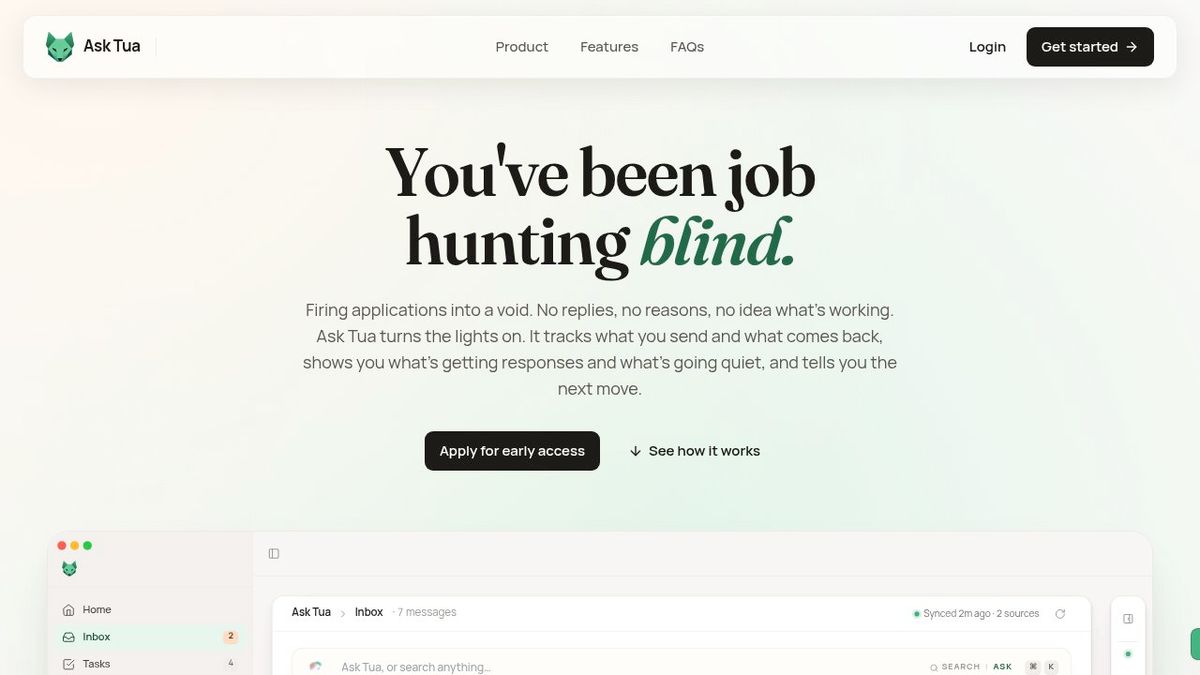
If you want one place to organise your applications, track your prep, and manage your entire job search without the admin, Ask Tua is opening its first 50 beta spots soon. Built on patterns from 300+ coaching engagements and £1.3M+ in salary raises. Join the waitlist and get early access.
And if you are also working on your first-round interview performance more broadly, the guide on first round interview fixes covers the four most common reasons experienced candidates do not progress, and how to correct them.
Prepare company research, 6-8 support stories, and clear answers to behavioural, troubleshooting and motivation questions. Focus on empathy, de-escalation, ownership and how your work affects retention or customer trust, not just ticket handling.
Use a short headline, then answer with STAR. Keep the Situation and Task brief, spend most of your time on the Action, and end with a concrete Result. Specific details, numbers and follow-up actions make your answer stronger.
They want proof that you can think clearly under pressure, calm customers down, troubleshoot methodically and follow through. In SaaS roles, they also want signs that you understand the product's role in adoption, retention and customer lifetime value.
Have two stories ready, one about an angry customer and one about rebuilding trust after a mistake or delay. Show that you acknowledged the emotion, clarified the issue, set expectations and followed through on what you promised.
Aim for 60-120 seconds per answer. That keeps you concise without sounding rushed. Most of the detail should sit in the Action section, because that is where your judgement and support skill are easiest to assess.
About the Author

Lucien Krogel
Founder & CEO
Lucien founded Ask Tua after six years coaching people through complex job searches. He kept seeing strong candidates lose momentum because their roles, CVs, recruiter messages, interviews, follow-ups and outcomes were scattered across different tools. He built Ask Tua as an AI job search assistant with a connected workspace, so candidates can understand what is happening in their search and decide what to do next.
Full Bio → Guide
GuideFeel stuck in your job search? Learn why next-step uncertainty happens, how to spot the real signal, and how Ask Tua helps you decide what to do next.
Lucien Krogel·July 23, 2026·12 min read Guide
GuideLearn how to track job applications, recruiter messages, follow-ups, interview stages and next actions in one connected job search system.
Lucien Krogel·July 22, 2026·11 min read Guide
GuideCompare the best AI job search assistant for active searches. See what matters, what ChatGPT misses, and why connected context changes the result.
Lucien Krogel·July 21, 2026·12 min read